
Rustic flavored dish
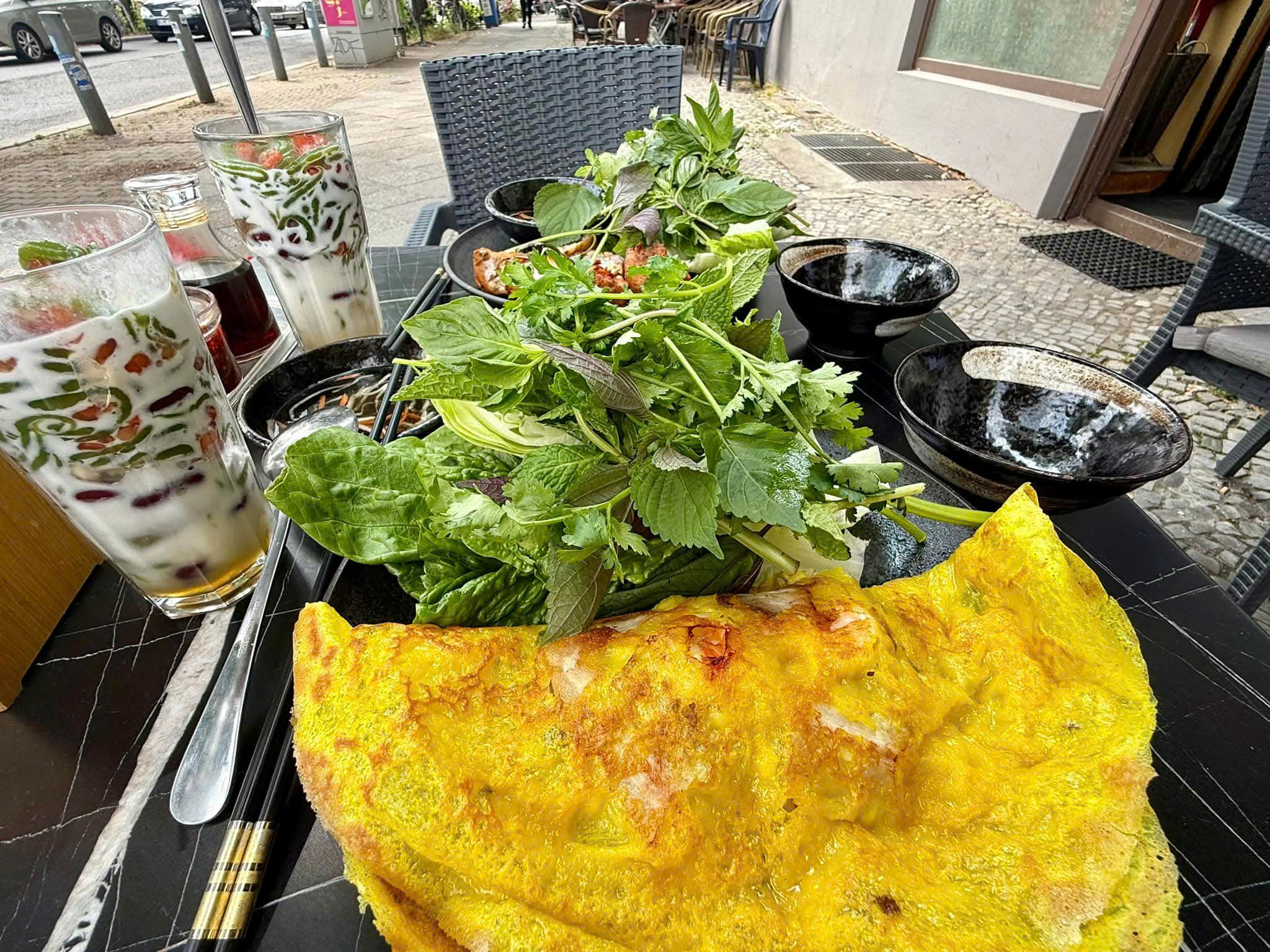
In Vietnam, my country has always been famous for its diverse culture and cuisine. Amidst all those victuals, An Giang — my homeland — stands out as a province that gathers all those aromas and flavors in one place. Taking the opportunity to visit my hometown, I had to ‘sacrifice’ to make an evaluation table like this!
Tammie Noodles – My love!
When you get to An Giang, it would really be foolish to miss this “cake” dish. Translated into English, its name would be “Tammie Noodles.” But actually, in Vietnamese, its name is “Bánh Tằm” – where “Bánh” here means “cake,” and “tằm” sounds like silkworm in Vietnamese.
It might be a bit riddiculous, but indeed in Vietnam, people often prefer to call noodles made from rice flour ‘Bánh’ (cake), for example, ‘bánh phở’ (Pho Noodles) or ‘bánh bún’ (Rice vermicelli). Usually, this way of speaking only applies to newly cooked noodles, before adding the broth. However, in some localities, they still like to call them this way because it sounds more ‘friendly’ and ‘close’.
Back to the dish, Tammie Noodles is a dish that includes noodles made from rice flour, so the outside of the noodles will be somewhat ‘rough,’ creating a chewy texture and a pleasurable feeling when eating. This dish is usually served with sweet fish sauce (but in some localities, it is also commonly eaten with coconut milk), fresh herbs, lettuce, bean sprouts, cucumber, boiled shrimp, lean pork, and a bit of fragrant, nutty peanuts, making it very enjoyable to eat!
I like going to the market with my mother. After that, we usually take a walk around to buy various kinds of cakes and breakfast. Usually, my breakfast would be this kind of this Tammie noodles.
Lovely Sweet Dessert
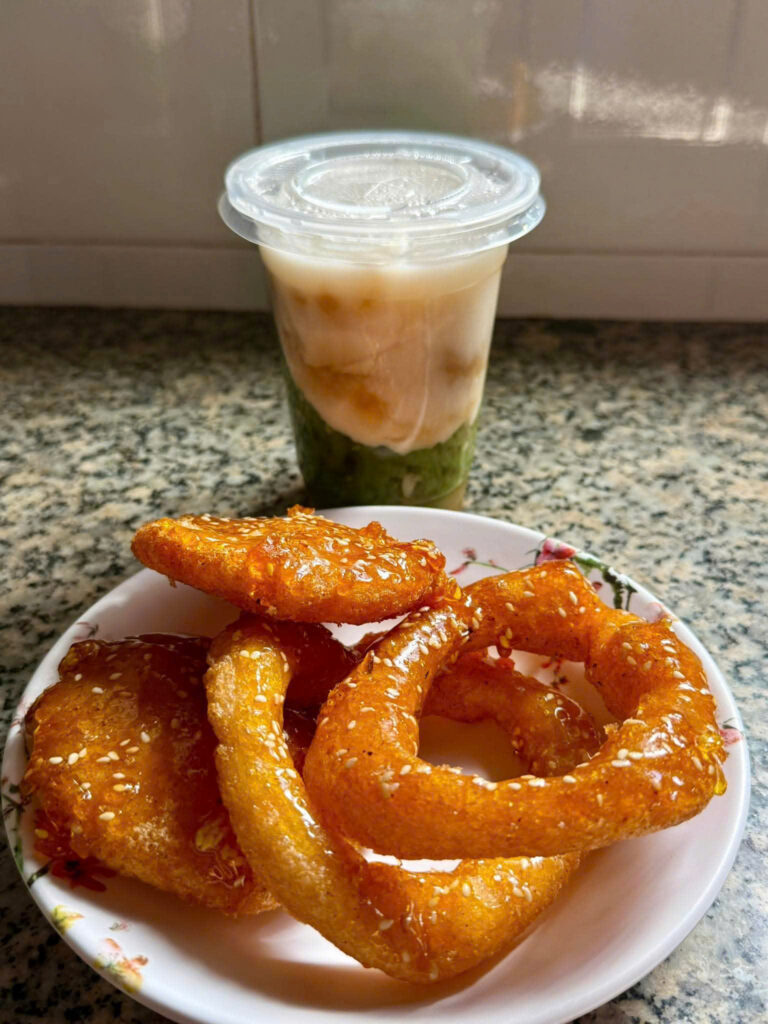
Besides Tammie Noodles, my hometown also has quite a few sweet dishes, typically the ones I like the most are Thai Sweet Gruel, Vietnamese Sponge Cake and Sesame Balls.
However, although those dishes are my favorites, I have no idea about their origin, ingredients and recipes. But at least it means that I can put all my thought into describing their tastes.
At first, I would like to mention Thai Sweet Gruel. During my childhood, I always feel happy when my mom brought this dessert for me after she came back from shopping. As I remember, an “quality” Thai Sweet Gruel includes sweet of some local tropical fruits and the sweet gruel, greasy and a little bit salty of coconut milk.
For a child who was “obsess” to local traditional dessert from Southeast Vietnam, I really like the flavor of coconut milk because of its cognation and presence in almost all Vietnamese sweet dishes. In my opinion, coconut milk emphasize the taste of Thai sweet soup, and play a crucial role in making their friendly look.
On the other hand, there are not only coconut milk make sense, but also the toppings and the sweet soup. The common types of toppings are tropical fruits, such as jackfruit, longan, and sometimes crushed durian. After that comes the refreshing sweetness of sweet soup, along with red pomegranate-like seeds (which, even as an adult, I still have no idea what they are made of, and certainly not real pomegranate). The fruits usually enhance the sweetness of the sweet soup, combined with the slightly salty and rich coconut milk, creating a harmonious flavor that is not cloying. Some people, from my observation, even add ice to the sweet soup to mash it up, eating it like a drink.
There is also Vietnamese Sponge Cake, one of the dishes I also often eat as a breakfast in the rustic countryside.
This is a colorful dish, dyed from vegetable and fruit juices, among others. In comparison, its texture is similar to the famous Italian sourdough bread, but the yeast is adjusted to create a denser texture.
For that reason, I often eat Vietnamese Sponge Cake with the coconut milk mentioned above. This helps to mask the sour taste of the yeast while enhancing the flavor of the dish. The only difference is that the coconut milk in the above dessert soup is salty, while the coconut milk used for dipping this cake has a more harmonious, balanced taste (and you can add some spring onions).
But to mention my favorite dishes without including sesame balls would truly be an extreme omission. The Vietnamese sesame ball has a thin dough on the outside and a soft, sweet, slightly salty, and rich mung bean filling inside. In some regions, they also have a ring-shaped pastry with a thick dough (almost like bread), coated with a layer of syrup before frying, so that when finished, the syrup layer becomes crispy, covering the entire fried dough.
Ending with fruits
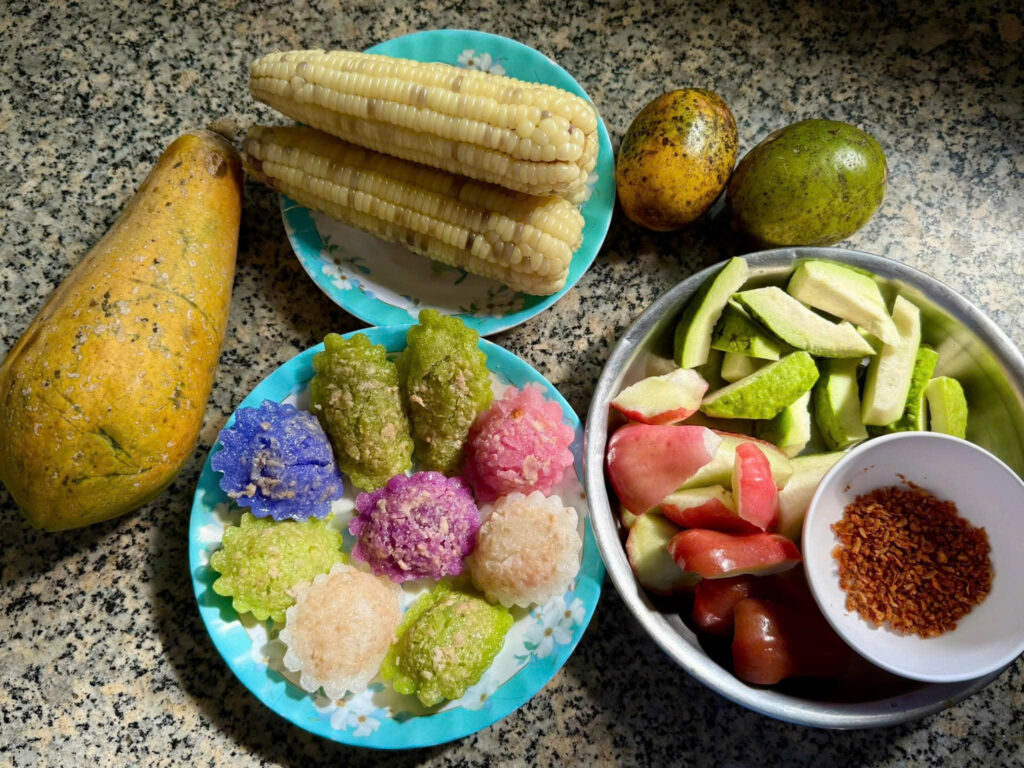
After all those sweet dishes, I end up my “tea party” with some tropical fruits, include Papaya, mango, guava and plum. Papaya and guava were good, while plum was a little bit sour.
On the other hand, mango still perfect like always. I think because I have tried the mixture of fish sauce and sugar.
In fact, it was a weird but tasty combination. That’s since the sour of young mango are combined with a bit sweet of sugar and salty of fish sauce. This leads to a strong, appealing, and charming mixture that is indispensable in any mango dish in Vietnam.
In fact, sometimes I even add chili into this mixture just to make it more spicy.